Bath, OH · Summit County
Roof Leak Water Removal in Bath, OHWall Cavity Drying & Leak Source Identification
Roof Leak Water Removal in Bath covers emergency roof tarping, attic water extraction, ceiling water damage cleanup and wet insulation removal.
Answered 24/7
Help With Roof Leak Water Damage in Bath
Wet ceilings, damp insulation and water running down an inside wall are all signs that a roof leak has gone past the attic floor.
Roof leak water removal is available in Bath and nearby Montrose-Ghent, Richfield and Fairlawn. The pros tarp the opening if needed, extract the water and dry the attic framing and ceiling drywall.
What Roof Leak Water Removal Covers in Bath
Wall Cavity Drying
Roof leaks often run down inside exterior walls. The pros check wall cavities under the leak and dry them through small holes or by removing the baseboard.
Leak Source Identification
Photos of the entry point, the wet decking and the path of the water give the roofer and your insurer a clear record of the leak.
Structural Drying Services
Wet framing in Bath attics is dried with directed airflow and dehumidification. Daily readings show when the wood is dry enough for repairs.
Wet Insulation Removal
Wet insulation loses its value and flattens. Removing it exposes the ceiling drywall and joists so air movers and dehumidifiers can reach them.
Emergency Roof Tarping
When shingles are torn or a branch has punched a hole, the pros cover the opening with a weighted or battened tarp before they start drying the attic.
When a Roof Leak Needs Water Removal
Dark Spots on Attic Wood
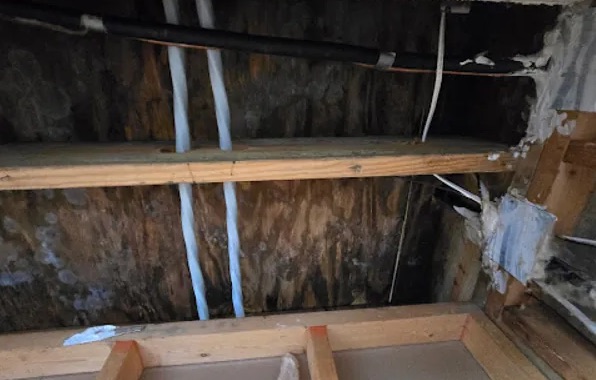
Dark streaks or spots on rafters and roof decking show where water has been running or sitting for a while.
Dripping From a Light Fixture
Water dripping from a light or ceiling fan means it has pooled above the ceiling. Turn off that circuit and keep people clear.
Gutters Spilling Over the Roof Edge
Gutters that overflow toward the house during storms can push water under the shingles and into the wall top plates.
Daylight Through the Roof Deck
Light showing through the decking from inside the attic marks a gap where rain can come straight in.
How Roof Leak Water Removal Works in Bath
Step 1: Assess the Leak
The pros look at the roof, attic and ceilings to see how long the leak has been running and what it has soaked.
Step 2: Remove Water and Debris
Water, wet insulation and fallen drywall are cleared out so the attic and room below can dry evenly.
Step 3: Clean Wet Surfaces
Wood and drywall that stayed wet for a day or more are cleaned and treated before drying to limit odor and mold.
Step 4: Monitor Until Dry
Readings are taken on each visit and the equipment is moved as areas dry, until every wet spot reaches its target.
Where Roof Leaks Start in Bath
Clogged Gutters
Leaves and debris in gutters make water back up at the roof edge, where it seeps under shingles and into the soffit and walls.
Damaged or Missing Shingles
Wind, age and impact lift or tear shingles and leave the underlayment exposed, so rain soaks straight into the decking.
Nail Pops and Old Penetrations
Nails that back out and holes left from old dishes or antennas open small paths for water that grow with each storm.
Open Roof Valleys
Valleys carry the most water on a roof. Worn or poorly sealed valleys let that concentrated flow into the decking.
Roof Leaks in Bath Homes and Commercial Buildings
Residential Roof Leak Water Removal
Attic work in a house is tight. Local water extraction experts in Bath work from the joists, remove wet insulation and dry the ceiling drywall without stepping through it.
Commercial Roof Leak Water Removal
Leaks over stores and offices can wet stock, desks and electronics. The pros move contents out of the drip zone, extract the water and set up drying for the affected suites.
When a Roof Leak Is Too Big for DIY
If water is near lights or outlets, turn off that circuit at the breaker. Do not stand on a wet floor to reach a fixture that is dripping.
Pricing Roof Leak Water Removal in Bath
Costs rise when water has reached walls and floors below the attic, because each level needs its own extraction and drying setup.
Emergency Tarping
If the roof needs a tarp before drying can start, the materials and labor for that step add to the bill.
Insulation Removal
Bagging and hauling soaked insulation takes labor, and the attic needs new insulation once the framing is dry.
Belongings in the Way
Moving and drying furniture, stored boxes and electronics under the leak adds time to the job.
Does Insurance Cover Roof Leak Water Removal?
Call your insurer soon after you find the leak. Photos of the ceiling, attic and roof, plus the moisture readings, help the adjuster review the claim.
Why Call Local Water Extraction Experts for Roof Leak Water Removal in Bath
Finding Hidden Water
Thermal cameras and moisture meters find wet insulation and wall cavities that are not visible from the room below.
Drying to Measured Targets
Drying stops only when meters show the wood and drywall are dry, not when the surface looks dry.
One Job, Start to Finish
Tarping, extraction, insulation removal and drying happen in order, so each step is not left waiting on another company.
24/7 Emergency Roof Leak Water Removal in Bath
If a roof leak is dripping into your home right now, turn off power to wet fixtures and call (216) 238-6265. Help is available day and night.
Call Now (216) 238-6265Local Roof Leak Water Removal Coverage for Bath
Roof leak water removal is available in Bath and nearby Montrose-Ghent, Richfield and Fairlawn. The pros tarp, extract and dry attics and ceilings after storms.
- Roof Leak Water Removal in Montrose-Ghent
- Roof Leak Water Removal in Richfield
- Roof Leak Water Removal in Fairlawn
- Roof Leak Water Removal in Hudson
- Roof Leak Water Removal in Sharon Center
- Roof Leak Water Removal in Copley
- Roof Leak Water Removal in Hinckley
- Roof Leak Water Removal in Cuyahoga Falls
FAQ: Roof Leaks, Attics and Ceilings
Is it safe to stay in a room with a wet ceiling?
Keep people out from under a ceiling that sags or drips. Turn off power to wet light fixtures until the ceiling has been checked.
How long does it take to dry an attic after a roof leak?
Drying usually takes three to five days, depending on how wet the wood is and how much insulation came out. Readings decide when it is done.
Can my belongings be saved after a roof leak?
Many can. Furniture and boxes are moved out of the drip zone and dried. Items that soaked for a long time or are badly stained may not be worth saving.
How soon should water removal start after a roof leak?
As soon as possible. Wet drywall and insulation can start to grow mold in 24 to 48 hours, and a ceiling holding water can sag and fall.
Can a roof leak cause mold in the attic?
Yes, if the wood and insulation stay wet. Prompt extraction and drying, plus removing soaked insulation, keep the attic from staying damp long enough for mold.