Twinsburg, OH · Summit County
Basement Water Removal in Twinsburg, OHSump Pump Failure Water Cleanup & Basement Moisture Inspection
Homeowners in Twinsburg get Basement Water Removal for basement floor water damage, basement water pump out and basement moisture inspection.
Answered 24/7
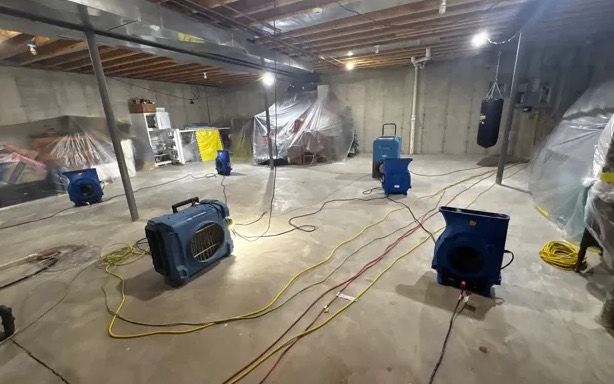
Expert Basement Water Removal in Twinsburg, Macedonia, Aurora and Hudson
In Twinsburg, a finished basement or lower level takes more work after a flood. Carpet, pad, laminate, drywall and insulation all trap water against the concrete and framing.
Homes in Twinsburg and nearby Macedonia, Aurora and Hudson with basements face storm seepage, sewer backups and plumbing leaks. Help with basement water removal covers pump-out, wall and floor drying and dehumidification.
Comprehensive Basement Water Removal Solutions
Sump Pump Failure Water Cleanup
Cleanup after a sump failure includes drying the area around the pit and noting whether the pump, switch or power was the cause.
Basement Moisture Inspection
An inspection shows how high water wicked up the walls and how far it spread under flooring, which sets the drying plan.
Basement Drying Services
Equipment stays until the basement reads dry, not just until it looks dry. Removing it early lets dampness return.
Basement Water Pump Out
A pump-out removes standing water from the basement with submersible pumps, discharging it outside and away from the foundation.
Basement Dehumidification
Dehumidifiers run continuously during drying, and their output is checked to track how much water is still coming out of the materials.
Warning Signs You Need Basement Water Removal
Warped or Buckling Flooring
Flooring that buckles, lifts or feels spongy has water trapped between it and the slab.
Wet or Damp Basement Walls
Basement walls that look dark, feel damp or show tide lines are taking on or holding water.
Mold or Mildew
Dark spots on drywall, framing or stored items mean the area has stayed wet for days.
Musty Odors and Mold Smell
A musty or damp smell in the basement points to wet materials hidden somewhere in the space.
How Basement Water Removal Works in Twinsburg
Step 1: Safety Assessment and Pump Out
Electrical hazards are checked, then deep water is pumped outside away from the foundation.
Step 2: Content Removal and Damage Documentation
Wet belongings are moved, and photos record the water level and damaged materials.
Step 3: Targeted Water Removal and Drying
Carpet is extracted, wet drywall is cut back and air is aimed at walls and the slab.
Step 4: Sanitization and Moisture Control
Surfaces touched by dirty water are disinfected, and dehumidifiers keep humidity low.
Common Causes of Basement Flooding in Twinsburg
Appliance Malfunctions and Overflows
Washers, utility sinks and water softeners in the basement can overflow or leak.
Heavy Rainfall and Storm Flooding
Heavy rain saturates the soil and pushes water through walls, cracks and the floor joint.
Sump Pump Malfunction or Power Loss
A sump pump that fails mechanically or loses power during a storm lets groundwater rise.
Plumbing Leaks or Pipe Bursts
Supply lines, drain pipes and water heaters in the basement can leak or burst onto the floor.
Residential and Commercial Basement Water Removal in Twinsburg
Residential Basement Water Removal
Older homes with a basement may see seepage with every heavy storm. Water removal handles the current damage, and the entry point is noted for a waterproofing contractor.
Commercial Basement Water Removal
Multi-unit buildings with shared basements need each storage and laundry area pumped, dried and documented for the property manager.
When to Hire Local Pros for Basement Water Removal
Fans by themselves can spread damp basement air through the rest of the house. Basement drying needs dehumidifiers that pull moisture out of both the air and the concrete.
Understanding Basement Water Removal Pricing
Sewage cleanup, finished walls, after-hours calls and damaged appliances all add to the total for basement water removal in Twinsburg.
Basement Square Footage
Larger basements need more extraction, more drying equipment and more days of drying.
Affected Materials
Finished walls, carpet and laminate take more removal work than bare concrete.
Water Depth and Volume
Deeper water takes more pumping time and usually means more materials got wet.
Does Insurance Cover Basement Water Removal?
Many homeowner policies cover sudden basement water from a burst pipe but not groundwater seepage. Sewer backup coverage is often an add-on, so check yours.
Benefits of Hiring Local Pros for Basement Water Removal in Twinsburg
Focus on Drying Outcomes
Drying continues until readings are normal, not just until surfaces look dry.
Contamination Safety Protocols
Sewage and dirty water are handled with protective gear, containment and disinfection.
Moisture Inspection
Meters and thermal cameras find water in walls, floors and slab that looks dry.
Emergency Basement Water Removal Available 24/7
Basement taking on water in Twinsburg? Make power safe if you can, move what you can and call (216) 238-6265. Help is available 24/7.
Call Now (216) 238-6265Local Basement Water Removal Coverage for Macedonia, Aurora and Hudson
Help with basement water removal reaches Macedonia, Aurora and Hudson, plus other communities around Twinsburg, for finished and unfinished basements alike.
- Basement Water Removal in Macedonia
- Basement Water Removal in Aurora
- Basement Water Removal in Hudson
- Basement Water Removal in Northfield
- Basement Water Removal in Solon
- Basement Water Removal in Bedford Heights
- Basement Water Removal in Bedford
- Basement Water Removal in Maple Heights
- Emergency Damage Restoration in 44087
- Storm Damage Restoration in 44087
- Water Damage Restoration in 44087
- Water Extraction Service in 44087
- Water Leak Detection in 44087
- Water Removal Service in 44087
Frequently Asked Basement Water Removal Questions
What is involved in basement leak cleanup?
Stopping the leak, extracting the water, drying the floor and walls and checking for hidden moisture under flooring.
How is contaminated water handled in a basement?
With protective gear, containment, removal of porous materials and disinfection of hard surfaces before drying.
What is involved in basement water removal?
Making power safe, pumping out standing water, extracting floors and carpet, removing soaked materials and dehumidifying until dry.
What happens during basement moisture control?
Dehumidifiers and air movers keep humidity low while materials dry, and readings confirm when the space is normal.
Can I dry my basement myself with fans?
Fans help with surface water, but walls and concrete need dehumidifiers and readings to dry fully.