Bedford Heights, OH · Cuyahoga County
Basement Water Removal in Bedford Heights, OHBasement Moisture Inspection & Basement Water Pump Out
Basement Water Removal in Bedford Heights includes basement water pump out, basement drying services and basement moisture inspection.
Answered 24/7
Reliable Basement Water Removal Near Bedford Heights, Ohio
In Bedford Heights, a burst pipe or heavy rain can let water rise fast in a basement. The water usually spreads from the low point across the whole floor and into finished rooms.
In Bedford Heights, when a basement or below-grade room takes on water, it usually follows heavy rain, a sewer backup or a burst pipe. Local basement water removal pros serve Bedford Heights, Warrensville Heights, Bedford and Orange, pumping water out and drying the space.
Comprehensive Basement Water Removal Solutions
Basement Moisture Inspection
Readings are recorded at each visit, giving you and your insurer a clear record of the drying.
Basement Water Pump Out
When water is more than an inch or two deep, pumps move it far faster than wet vacs, which limits how long walls sit in water.
Basement Wall Drying
Basement walls are checked with moisture meters. Wet drywall is cut back above the water line, and insulation behind it is removed.
Basement Floor Water Damage
Concrete floors are squeegeed, extracted and dried with airflow and dehumidifiers until moisture readings drop.
Emergency Basement Flooding
Emergency response starts with making power safe, stopping the source if possible and pumping out the water.
Warning Signs You Need Basement Water Removal
Warped or Buckling Flooring
Flooring that buckles, lifts or feels spongy has water trapped between it and the slab.
Standing Water in Basement
Standing water anywhere on the basement floor needs to be pumped out before it soaks the walls.
Wet or Damp Basement Walls
Basement walls that look dark, feel damp or show tide lines are taking on or holding water.
Efflorescence on Concrete Walls
White, powdery deposits on concrete walls mean water is passing through the masonry.
How Basement Water Removal Works in Bedford Heights
Step 1: Source Control and Water Pump Out
The leak is shut off and standing water is pumped out, starting at the lowest point.
Step 2: Water Extraction
Extractors pull water from carpet, pad and concrete, and wet vacs clear corners and stairs.
Step 3: Dehumidification and Drying
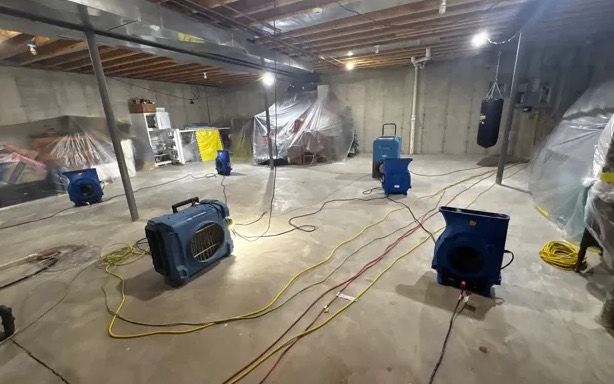
Large dehumidifiers and air movers dry walls, framing and slab over several days.
Step 4: Inspection and Clearance for Repair
Final readings confirm the basement is dry and ready for drywall and flooring repairs.
What Causes Water Damage in Basements
Improper Landscape Grading
Soil that slopes toward the house directs rainwater straight to the basement walls.
Window Well Leaks and Drainage
Window wells without drains or covers fill with rain and leak through the windows.
Plumbing Leaks or Pipe Bursts
Supply lines, drain pipes and water heaters in the basement can leak or burst onto the floor.
Sump Pump Malfunction or Power Loss
A sump pump that fails mechanically or loses power during a storm lets groundwater rise.
Both Residential & Commercial Basement Water Removal
Residential Basement Water Removal
Older homes with a basement may see seepage with every heavy storm. Water removal handles the current damage, and the entry point is noted for a waterproofing contractor.
Commercial Basement Water Removal
Multi-unit buildings with shared basements need each storage and laundry area pumped, dried and documented for the property manager.
Why DIY Basement Water Removal Often Fails in Bedford Heights
Fans by themselves can spread damp basement air through the rest of the house. Basement drying needs dehumidifiers that pull moisture out of both the air and the concrete.
Investing in Professional Basement Water Removal
The cost of basement water removal in Bedford Heights depends on how deep the water is, what type of water it is and how much finished material has to come out.
Water Depth and Volume
Deeper water takes more pumping time and usually means more materials got wet.
Access and Complexity
Narrow stairs, low ceilings and crowded storage areas make the work slower and longer.
Contamination Level
Sewage or dirty water needs protective gear, removal and disinfection, which costs more.
Does Insurance Cover Basement Water Removal?
Coverage for basement water removal depends on the water source and your policy. The pros document the damage and drying, and your insurer decides what is covered.
The Value of Professional Basement Water Removal
Focus on Drying Outcomes
Drying continues until readings are normal, not just until surfaces look dry.
Post-Service Moisture Verification
Final readings are recorded before equipment leaves, so you know the basement is dry.
Moisture Inspection
Meters and thermal cameras find water in walls, floors and slab that looks dry.
Emergency Basement Flood Response in Bedford Heights
Standing water in a basement soaks walls and floors by the hour. Call (216) 238-6265 for basement water removal in Bedford Heights at any time, day or night.
Call Now (216) 238-6265Communities Served for Basement Water Removal
Besides Bedford Heights, local basement water removal pros handle basement pump-outs, wall drying and dehumidification in nearby Warrensville Heights, Bedford and Orange.
- Basement Water Removal in Warrensville Heights
- Basement Water Removal in Bedford
- Basement Water Removal in Orange
- Basement Water Removal in Maple Heights
- Basement Water Removal in Solon
- Basement Water Removal in Garfield Heights
- Basement Water Removal in Macedonia
- Basement Water Removal in Northfield
Frequently Asked Basement Water Removal Questions
Can wet drywall in a basement be saved?
Sometimes, if the water was clean and removed quickly. Soaked or contaminated drywall is cut out above the water line.
What is involved in basement water removal?
Making power safe, pumping out standing water, extracting floors and carpet, removing soaked materials and dehumidifying until dry.
How is basement wall drying done?
Wet drywall is cut back, insulation removed and directed airflow and dehumidifiers dry the studs and masonry.
What causes basement floor water damage?
Storm seepage, burst pipes, appliance leaks, foundation cracks and sewer backups through floor drains are the usual sources.
What is the difference between a pump out and extraction?
A pump out removes deep standing water. Extraction pulls the remaining water from carpet, pad and floors.