Lakewood, OH · Cuyahoga County
Basement Water Damage Restoration in Lakewood, OHBasement Dehumidification & Basement Water Extraction
Basement Water Damage Restoration in Lakewood runs from basement water extraction and basement floor water removal to basement dehumidification.
Answered 24/7
Basement Water Damage Restoration for Lakewood Homes
A basement dries slower than any other part of a house. The air is cool, there is little sunlight and the concrete holds moisture for a long time. In Lakewood, that makes extraction and steady dehumidification important.
One burst pipe or heavy storm in Lakewood can flood a basement. Local restoration pros serve Lakewood and nearby Rocky River, Fairview Park and Brooklyn, with help available around the clock.
Basement Water Damage Restoration Services in Lakewood
Basement Dehumidification
A basement with no moisture problem before the flood may still need a dehumidifier afterward while the concrete dries.
Basement Water Extraction
Submersible pumps remove deep standing water, then portable extractors pull water from carpet, pad and the concrete floor.
Basement Sewer Backup Cleanup
Porous materials touched by sewage, such as carpet, pad and lower drywall, are removed. Concrete and framing are cleaned and disinfected.
Basement Floor Water Removal
A slab can look dry on top while still holding water. Moisture readings show when it is ready for new flooring.
Basement Wall Drying
Finished basement walls hide wet insulation and framing. Removing the bottom of the drywall lets air reach the cavity.
How to Know You Need Basement Water Damage Restoration in Lakewood
Condensation on Windows or Pipes
Water beading on cold pipes or basement windows shows high humidity that keeps materials damp.
Damp or Musty Odors
A damp, earthy or musty smell in the basement often means hidden moisture in walls, carpet or the slab.
Sump Pump Failure or Overflow
A sump pump that runs constantly, fails to start or lets the pit overflow puts the basement at risk.
Standing Water in the Basement
Any standing water on the basement floor needs pumping right away, before it soaks walls and framing.
How Basement Water Damage Restoration Works in Lakewood
Step 1: Water Removal
Pumps and extractors remove standing water from the basement floor, starting at the lowest point.
Step 2: Targeted Moisture Evaporation
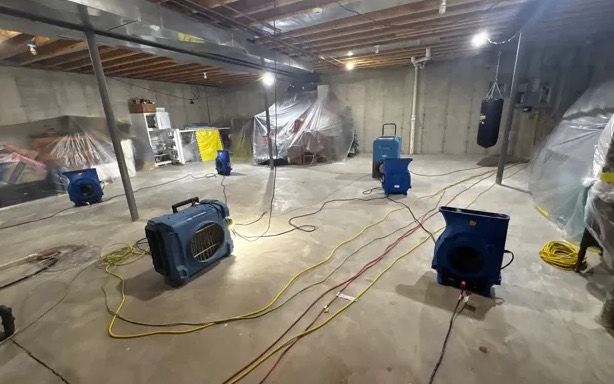
Air movers are aimed at wet walls, framing and the slab to speed evaporation.
Step 3: Humidity Control
Large dehumidifiers pull moisture from the basement air, with readings checked every day.
Step 4: Final Verification and Restoration
Final readings confirm the basement is dry, and the space is ready for drywall and flooring repairs.
Frequent Sources of Water Damage in Lakewood
Faulty Basement Waterproofing
Old or failed waterproofing on foundation walls lets water through during wet weather.
Clogged Floor Drains
A floor drain blocked by debris cannot carry off water from a leak or overflow, so it spreads across the basement floor.
Stormwater Runoff Into Lower Levels
Heavy rain running off hard ground or a sloped yard can pour down stairwells and under doors into below-grade rooms.
High Water Table and Hydrostatic Pressure
A high water table pushes groundwater up through the slab and into the joints between wall and floor.
Home and Business Basement Water Damage Restoration in Lakewood
Residential Basement Water Damage Restoration
Homeowners with older basements may have seepage that returns with each storm. Drying fixes the current damage, and the source is noted for a waterproofing contractor.
Commercial Basement Water Damage Restoration
Apartment and condo buildings with shared basements or lower levels may have laundry and storage below grade. Each area is extracted, dried and recorded for the building manager.
When to DIY and When to Call the Pros for Basement Water Damage Restoration
Fans alone can push damp air into the rest of the house. Basement drying needs dehumidifiers to pull the moisture out of the air and the concrete.
Understanding Basement Water Damage Restoration Pricing in Lakewood
Sewage cleanup, finished walls, storm-night calls and damaged appliances all add to the total for basement water damage restoration in Lakewood.
Water Category
Clean water costs less to handle than sewage, which needs protective gear, removal and disinfection.
Secondary Damage
Damage to furnaces, water heaters and belongings adds repair and replacement costs.
Affected Square Footage
Larger basements need more extraction, more drying equipment and more days of drying time.
Does Insurance Cover Basement Water Damage Restoration?
Coverage for groundwater seepage and backups varies widely between policies. Ask your adjuster whether your policy includes it before work begins.
Benefits of Local Pros for Basement Water Damage Restoration in Lakewood
Industrial-Grade Equipment
Pumps, extractors and large dehumidifiers remove water much faster than household wet vacs and fans.
Industry Drying Standards
Drying follows industry water damage standards, with readings taken at every visit.
Detailed Documentation
Photos, readings and drying logs are kept to support your insurance claim.
24/7 Emergency Basement Water Damage Restoration for Lakewood
A flooded basement damages walls, furnaces, water heaters and belongings quickly. Call (216) 238-6265 for basement water damage restoration in Lakewood at any hour.
Call Now (216) 238-6265Basement Water Damage Restoration Near Lakewood: Areas Served
Help with basement water damage restoration is also available in communities near Lakewood, including Rocky River, Fairview Park and Brooklyn, for flooded basements and sewer backups.
- Basement Water Damage Restoration in Rocky River
- Basement Water Damage Restoration in Fairview Park
- Basement Water Damage Restoration in Brooklyn
- Basement Water Damage Restoration in Brook Park
- Basement Water Damage Restoration in Bay Village
- Basement Water Damage Restoration in Westlake
- Basement Water Damage Restoration in Middleburg Heights
- Basement Water Damage Restoration in Parma Heights
- Emergency Damage Restoration in 44107
- Storm Damage Restoration in 44107
- Water Damage Restoration in 44107
- Water Extraction Service in 44107
- Water Leak Detection in 44107
- Water Removal Service in 44107
FAQ for Basement Water Damage Restoration in Lakewood
What health risks come with delayed basement flood cleanup?
Standing water and wet materials can support bacteria and microbial growth, and sewage carries contaminants that need disinfection.
Why is dehumidification so important after basement water removal?
Basements hold moisture in the air and concrete. Without dehumidifiers, walls and framing stay damp long after the water is gone.
What is the purpose of basement wall drying?
To remove water from drywall, insulation, framing and concrete so the walls can be repaired without trapping moisture.
What does below-grade moisture removal include beyond pumping?
Extracting carpet and pad, opening wet walls, running air movers and dehumidifiers, and checking readings until dry.
Why is quick action important for below-grade flood restoration?
Basements dry slowly, so every hour of standing water adds days of drying and more material to replace.